The Magic of Early Childhood: A Montessori Journey
MONTESSORI JOURNEY
Keerthika.M
3/5/20264 min read
Early childhood…
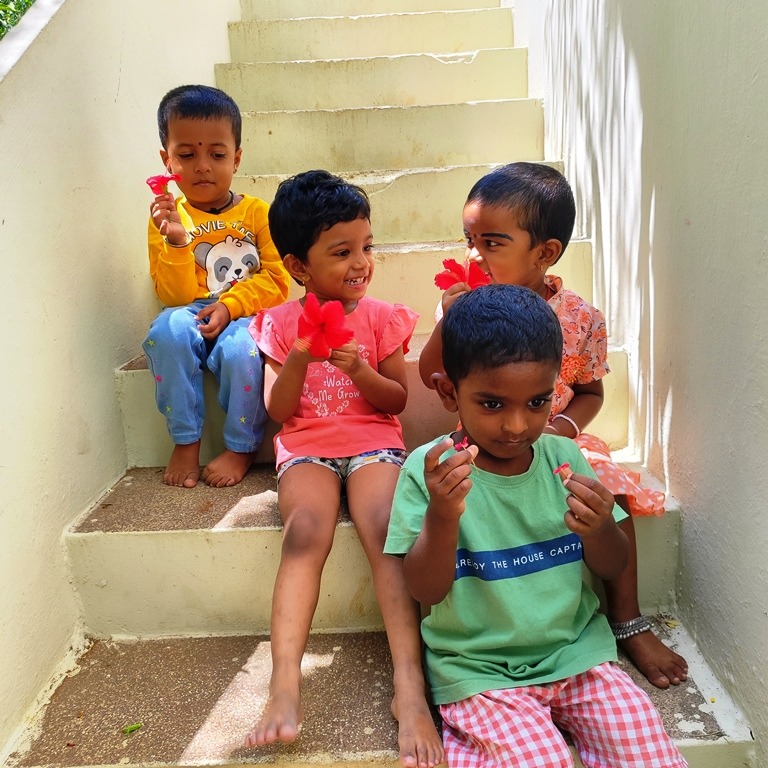
To me, it is a season of pure magic.
It is sparkling laughter.
It is endless questions.
It is tiny feet running without fear.
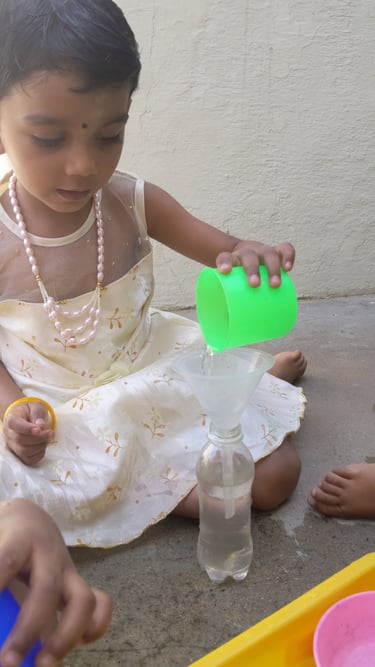
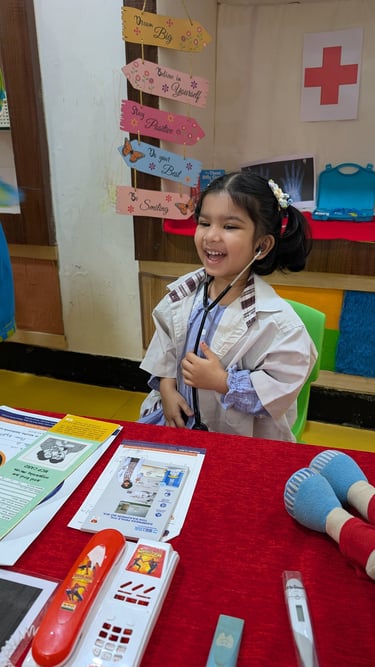
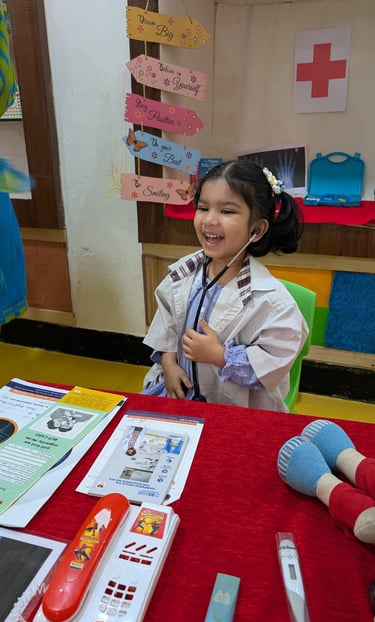
It is excitement over the smallest discoveries — a moving ant, a pouring cup of water, a new word learned and repeated with pride.
It is a period of happiness that adults often admire… but don’t always fully understand.
Because while we see play, children are absorbing everything around them. They imitate the way we speak. They copy how we move. They observe relationships. In these early years, learning is not forced — it happens naturally and rapidly.
And that brings me to a question I have often asked myself as an educator:
Without disturbing their happiness…
Without reducing their enthusiasm…
How do we offer education to a young child?
What do they really need at this age?
Numbers?
Alphabets?
Worksheets?
Or something deeper?
It was in searching for these answers that I began to truly understand the work of Maria Montessori — an educationist and physician who saw children not as empty vessels to be filled, but as individuals capable of constructing their own learning.
She beautifully said:
“The goal of early childhood education should be to activate the child’s own natural desire to learn.”
That line changed the way I looked at my classroom.
What Montessori Looks Like in Our Classroom
When people ask me why Montessori education is important in early childhood, I don’t begin with theory.
I think about what I see every single day inside our classroom.
The first thing you will notice when you walk in is our mixed-age group. Children of different ages share the same environment. At first, many parents wonder — Will the younger ones manage? Will the older ones get distracted?
But what I witnessed is something very beautiful.
The younger children observe silently. They watch how the older ones carry materials carefully, roll mats, complete work, and return it back to the shelf. Learning begins even before words are spoken.
The older children, without being forced, slowly step into the role of mentors. They demonstrate. They guide. They encourage. And in doing so, their own understanding deepens.
In this environment, comparison slowly disappears. Instead, respect grows. Patience grows. Empathy grows.
Social and emotional development doesn’t need a separate lesson here — it happens naturally.
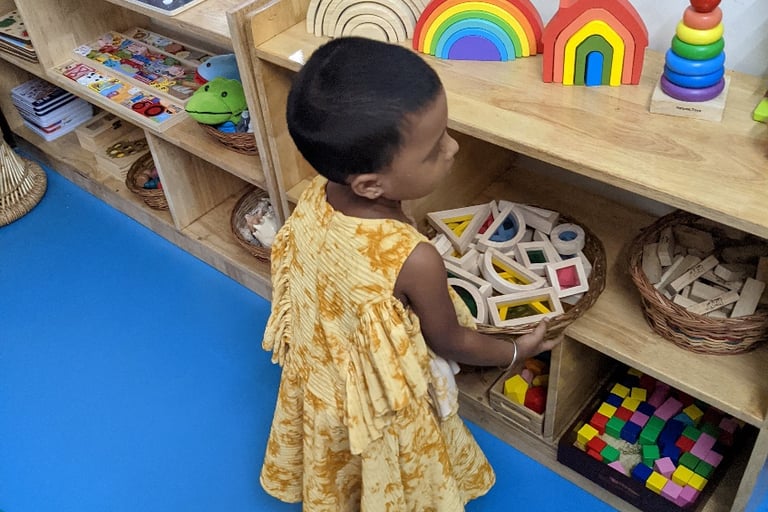
Another thing you will notice is this: children are not waiting for instructions all the time.
They are choosing.
But it is not random freedom. It is structured freedom.
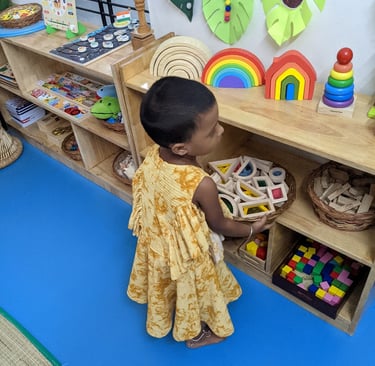
Our shelves are carefully prepared. Each material has a purpose. Each activity meets a developmental need. Within that prepared environment, children choose what they are ready for.
And I cannot explain how powerful this is.
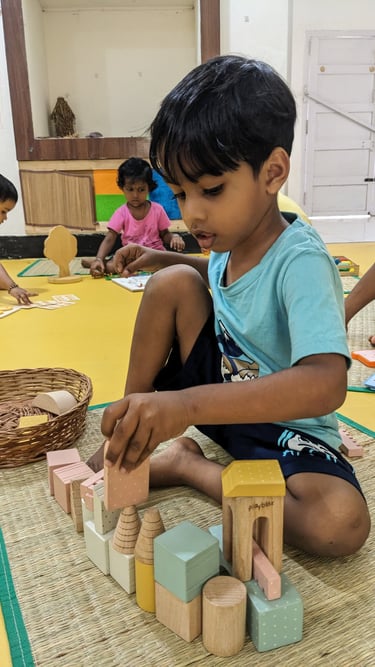
When a child walks confidently to a shelf, selects a material, carries it carefully, works with concentration, and returns it independently — something shifts inside them.
It builds confidence.
It builds decision-making ability.
It builds responsibility.
No one is rushing them. No one is comparing them. No one is rewarding them with stars or stickers. The satisfaction comes from within.
I have seen children repeat the same activity again and again — not because I asked them to, but because they wanted to master it. That is intrinsic motivation. That is the natural desire to learn that Maria Montessori spoke about.
Practical life activities
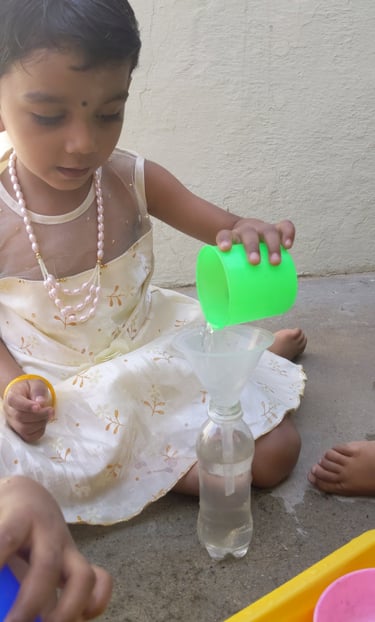
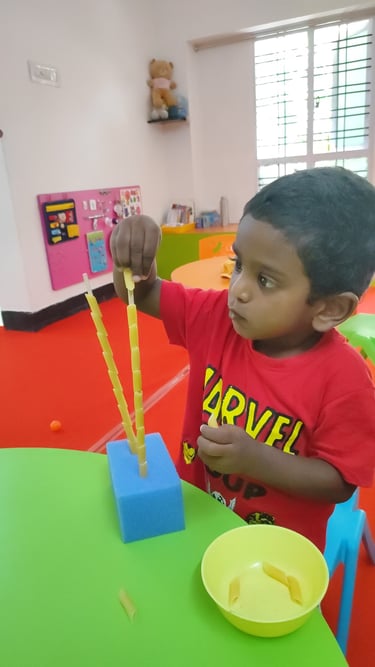
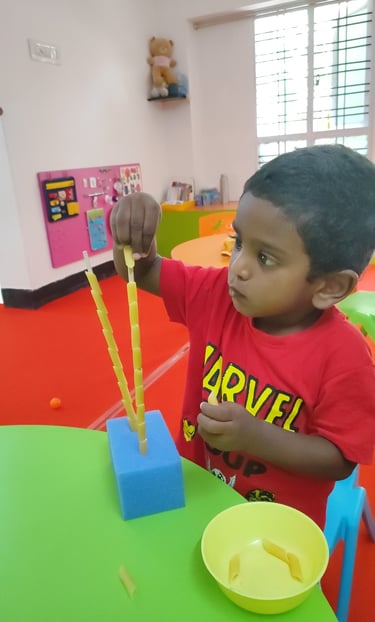
Pouring water, buttoning, cleaning spills, arranging materials — may look simple to adults. But in my experience, these are some of the most powerful learning moments.
Through these activities, children develop coordination, fine motor strength, concentration, and order. But more importantly, they develop independence. I still remember the pride on a child’s face after successfully pouring water without spilling. It may look small to us. But to them, it is a big achievement. And that feeling of “I can do it myself” is the foundation of lifelong confidence.
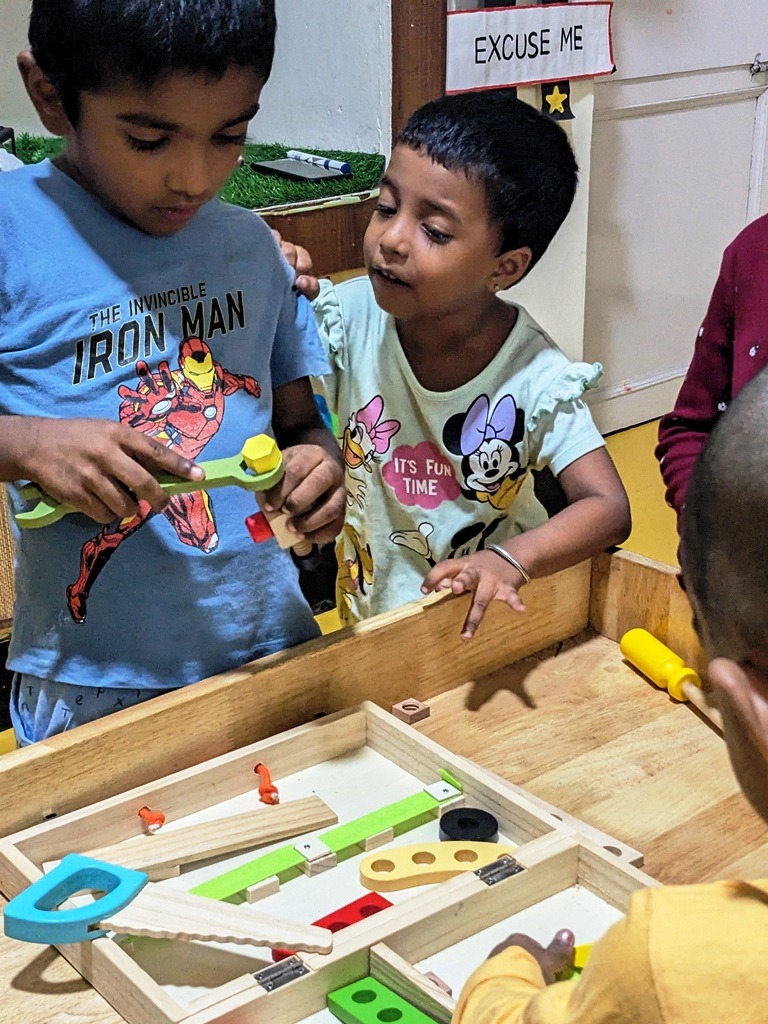
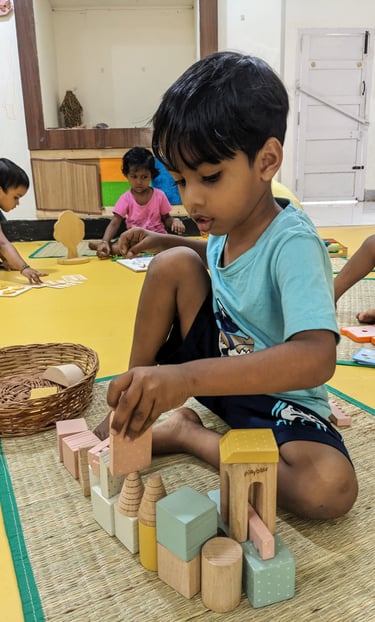
In our classroom, learning is always hands-on.
Mathematics is not introduced through memorisation first. Children touch, count, feel quantity. Language is not rushed through writing alone. They trace, listen, speak, and connect sounds before symbols.
I have seen how deeply children understand concepts when they experience them physically first. They are not memorising — they are discovering.
And when learning comes through discovery, it stays.
What touches me the most is the emotional security Montessori offers.
Because each child progresses at their own pace, there is less anxiety. There is no constant race. Children are not labelled as fast or slow. They are simply growing.
Over time, I have watched children become calm, focused, responsible, and self-motivated. They organise their work. They manage their time. They solve small conflicts respectfully. These are not skills taught through lectures. They are cultivated through the environment.
For me, Montessori education is not about expensive materials or a brand name.
It is about respecting childhood.It is about understanding that children are not empty vessels waiting to be filled.They are capable individuals, constructing themselves every day.Our role is not to control that construction — but to guide it gently, protect their joy, and prepare an environment where learning feels natural.
And that is why, in my experience, Montessori education in early childhood is not just important.
It is transformative.